





















Every year Legambiente deals with carrying out analyzes of Italian waters , through the navigation of its Goletta Verde . The trips of this boat are aimed at reporting polluted sections , points that present an environmental criticality or sewage drains without purifier . The presence of these factors jeopardizes the quality of the water: there are also concentrations of bacteria of fecal origin that exceed double the permitted limit! This situation endangers not only the health of the entire ecosystem, but also that of bathers.
Evaluation criteria
As we have already mentioned, to establish the health of a certain sea area are performed in the first placemicrobiological analyzes . Usually, the most controlled areas are those that coincide with industrial discharges and sewers , but also river mouths. These tests check for the presence of certain types of bacteria such as intestinal enterococci and Escherichia coli, which proliferate precisely where wastewater is spilled and where purifiers are lacking. If the results exceed the limit values imposed by the Italian legislation on bathing water (Legislative Decree 116/2008 and decree of the Ministry of Health of 30 March 2010), the water is considered polluted. On the other hand, when the results exceed the limits more than double, the beaches are indicated as heavily polluted. Also this year, sample studies were carried out in all Italian regions. Based on the results of the analyzes, it was possible to draw up this list of regions with polluted beaches.
Abruzzo
Goletta Verde reports criticism in rivers and streams, which then pour into the sea, polluting some stretches of the Abruzzo coast. The municipalities of Abruzzo that have passed the test for bathing are: Martinsicuro / Alba Adriatica, Giulianova, Montesilvano, Pescara, Casalbordino.
Unfortunately, there are three municipalities that have instead achieved bad results.
The most critical situation was in fact recorded in Francavilla a Mare, San Vito Chietino and Rocca San Giovanni.
The Legambiente survey points that revealed severe pollution were :
- Francavilla a Mare (CH), Mouth of the Alento River;
- San Vito Chietino (CH), mouth of the Feltrino river;
- Rocca San Giovanni (CH), mouth of the canal locality La Foce.
Basilicata
The Legambiente survey points that revealed severe pollution were :
- Nova Siri (MT), Toccacielo, Mouth of the Toccacielo canal;
- Pisticci / Scanzano Jonico (MT), Cavone river mouth;
- Maratea (PZ), Fiumicello / Santa Venere, Fiumicello river mouth.
Calabria
Another southern region is no better, besieged by tourists especially in summer for its blue sea. The quality of these waters is however very bad, due to the almost total lack of purifiers. Waste water from sewage systems pollutes 13 out of 23 points . Here the bacterial loads are dangerously high, often there are values that go beyond double the limits imposed by the legislation. Once again, the mouths of rivers, canals and streams are under scrutiny.
The Legambiente survey points that revealed severe pollution were :
- Acquappesa / Guardia Piemontese (CS), border between Pantana-Santa Rosalia-Macchia and Marina di Guardia Piemontese, Foce River Bagni c / o via Cristoforo Colombo;
- Lamezia Terme / Gizzeria (CZ), Localita Marinella / Gizzeria Lido, mouth of the Spilinga stream;
- Vibo Valentia (VV), Localita Vibona, Foce Fosso Sant’Anna
- Briatico (VV), Localita Piana di Vada, Foce del torrente Murria
- Ricadi (VV), Localita Turiano, mouth of the Ruffa stream;
- San Ferdinando (RC), Mouth of the Mesima river;
- Reggio Calabria (RC), Lido Comunale, mouth of the Caserta stream;
- Brancaleone Marina (RC), White Sands locality, Pantano Grande river mouth;
- Capo Rizzuto Island (KR), Localita Le Castella, Mouth channel beach to the right of the castle;
- Crotone (KR), mouth of the Passovecchio stream;
- Crotone (KR), Esaro river mouth;
- Rossano (CS), Marina di Rossano (CS), mouth of the Colognati stream.
Campania
The land of Naples and the Amalfi Coast has for years been experiencing a black crisis as regards the protection of the environment and in particular of its sea. In 2016, the findings of Goletta Verde decreed that in 17 points out of 31 (a real record!) The bacterial loads exceeded the permitted limits.
The Legambiente survey points that revealed severe pollution were :
- Centola (SA), Localita Caprioli, Foce rio near the beach;
- Capaccio / Agropoli (SA), mouth of the Solofrone river;
- Capaccio (SA), Torre di Paestum Licinella, Head mouth of the river;
- Capaccio (SA), Localita Laura, Foce rio at via Poseidonia 441;
- Eboli (SA), Marina di Eboli, Mouth discharge channel;
- Battipaglia (SA), Foce del Tusciano;
- Pontecagnano Faiano (SA), Location Via Jonio sea / Lungomare Magazzeno, Foce Torrente Asa;
- Salerno / Pontecagnano Faiano (SA), Torre Picentina locality, Picentino river mouth;
- Salerno (SA), Lungomare Cemente Tafuri, mouth of the river Irno;
- Atrani (SA), Dragone river mouth;
- Castellammare di Stabia (NA), Fosso Garibaldi locality, Beach facing the San Marco river;
- Torre Annunziata / Castellammare di Stabia (NA), mouth of the river Sarno;
- Ercolano (NA), Sea facing the mouth of the Vesuvian Lagno;
- Naples (NA), San Giovanni a Teduccio, Beach 50 meters to the left of the Volla riverbed;
- Pozzuoli (NA), Lido di Licola locality, mouth of the Licola canal;
- Castelvolturno (CE), Foce Regi Lagni;
- Mondragone (CE), Foce torrente Savone.
Emilia-Romagna
No pollution was found at the Legambiente survey points .
Friuli-Venezia Giulia
The Legambiente survey points that revealed severe pollution were :
- Muggia (TS), Mouth channel via Battisti crossroads Largo Caduti per la liberta;
- Villesse, Downstream of the Gradisca treatment plant;
- Savogna d’Isonzo, Downstream of the Gorizia treatment plant;
- Gorizia, Groina River, entry point into the Isonzo.
Lazio
The coast of the province of Rome is the worst, but ten locations, most of them located on the mouths of watercourses , have been declared heavily polluted and another three polluted. Among the areas with the highest bacterial values is the Municipality of Cerveteri, near the Fosso di Zambra.
The Legambiente survey points that revealed severe pollution were :
- Minturno (LT), Scauri locality, Rio Recillo mouth;
- Minturno (LT), Marina di Minturno, Outlet drainage channel south of the dock;
- Formia (LT), Gianola locality, Rio Santacroce mouth;
- Sperlonga (LT), Beach on via Cristoforo Colombo crossing via Andrea Doria;
- Sabaudia (LT), Selva Piana-Baia d’Argento locality, Lake facing the canal at the end of Strada Selva Piana;
- Sabaudia (LT), Canal on Via Orsolini Cancelli;
- Sabaudia (LT), Canale on Via dei Bersaglieri;
- Latina (LT), Canal on Litoranea 6260 road;
- Nettuno (RM), Loricina Canal near via Matteotti;
- Anzio (RM), Lido dei Gigli, Foce del ditch Cavallo Morto – seafront of sterlizie;
- Ardea (RM), mouth of the Fosso Grande;
- Ardea (RM), Marina di Ardea, Foce Rio Torto, beach side;
- Pomezia (RM), Torvajanica locality, Crocetta canal mouth (Via Filadelfia);
- Fregene (RM), Location Lungomare di Ponente, Mouth of the river Arrone;
- Cerveteri (RM), Campo di mare, Foce Fosso Zambra;
- Tarquinia, Lido di Tarquinia, mouth of the Marta River;
- Montalto di Castro (VT), Montalto Marina, Mouth of the Fiora River;
- Trevignano Romano (RM), Canola, at the crossroads between via della Rena and via San Pietro;
- Bracciano (RM), Rio della Mole locality, Foce ditch Grotta Renara;
- Gradoli (VT), La Grata locality, Fosso Fosso Cannello mouth or Fosso Rigo mouth;
- San Lorenzo Nuovo (VT), Oppietti locality, Fosso il Fiume (Le Vene) / Foce del Fosso Ponticello;
- Grotte di Castro (VT), Prati Renari locality, Canale in Prati Renari locality;
- Bolsena (VT), Foce ditch along Viale Luigi Cadorna.
Liguria
Not even Liguria escapes the verdicts of Goletta Verde. The causes are always the same, i.e. the presence of bacterial loads that exceed the guard limit. The sad “nomination” of heavily polluted places was won by the locality of Corniglia in the province of La Spezia, Nervi in the province of Genoa and Pietra Ligure, Savona.
The Legambiente survey points that revealed severe pollution were :
- Vernazza (SP), Corniglia locality, Rio Corniglia mouth;
- Chiavari-Lavagna (GE), canal outlet at the mouth of the Entella stream;
- Genoa (GE), Localita Nervi, Foce torrente Nervi;
- Pietra Ligure (SV), Maremola torrent mouth.
Lombardia
The Legambiente survey points that found heavy pollution were :
- Ispra (VA), Mouth of the Acqua Negra stream;
- Brebbia (VA), Foce stream Bardello;
- Laveno Mombello (VA), Boesio torrent mouth;
- Luino (VA), Luino Center – Piazza Garibaldi terrace drainage;
- Porto Ceresio (VA), Foce rio Bolletta;
- Porto Ceresio (VA), Vallone torrent mouth;
- Perledo (LC), Esino torrent mouth;
- Padenghe sul Garda (BS), Porto, Foce stream near the port;
- Desenzano del Garda (BS), Unloading at the Golden Beach;
- Castelnuovo del Garda (VR), Ronchi, Rio Dugale dei Ronchi mouth.
Marche
Twelve points have been checked on the Marche coasts and only two have exceeded the reference pollution levels . The areas of Porto San Giorgio and San Benedetto del Tronto were found to be polluted.
The Legambiente survey points that revealed severe pollution were :
- San Benedetto del Tronto (AP), mouth of the Albula stream;
- Porto San Giorgio / Fermo (FM), Lido di Fermo, Valloscura torrent mouth.
Molise
This small region has always been considered an unspoiled corner of our Peninsula, but it is not so. In recent years, reported cases of illegal spills have increased, especially in the Biferno area, the most important river in Molise . It winds through the region for over 106 kilometers, before ending up in the Adriatic Sea. The river is really very polluted, as waste water with massive presence of synthetic chemical compounds coming mainly from the industrial sector is spilled into its waters . The absence of adequate water purification plants makes the situation really worrying.
The Legambiente survey points that revealed severe pollution were :
- Termoli (CB), North Coast, beach at the Cristoforo Colombo seafront roundabout;
- Termoli (CB), Sinarca river mouth.
Piedmont
The Legambiente survey points that revealed severe pollution were :
- Dormelletto (NO), Foce rio Arlasca (purifier drain);
- Arona (NO), Mouth of the Vevera stream, at the beach via De Gasperi;
- Arona (NO), Largo caduti Nassirya (Rio San Luigi spillway).
Puglia
Puglia has accustomed us to almost Caribbean sceneries, with transparent and crystalline sea. Faced with this wonder, we would never think that there could be pollution problems, instead the data speak for themselves. Although the situation is improving, especially in the sections used for bathing in the provinces of Lecce and Taranto, the problem of polluted water remains near the mouths of rivers and canals.
The Legambiente survey points that revealed severe pollution were :
- Palagiano (TA), Pino di Lenne Beach, Lenne River mouth;
- Castrignano del Capo (LE), Marina di Leuca, discharge channel;
- Brindisi (BR), Litorale Apani, Mouth channel c / da Posticeddu;
- Carovigno (BR), Torre Guaceto locality, Royal canal mouth;
- Trani (BAT), Boccadoro locality, Boccadoro basin outlet.
Sardinia
The Legambiente survey points that found heavy pollution were :
- Buggerru (SU), Portixeddu, Foce rio Mannu;
- Alghero (SS), San Giovanni, Cristoforo Colombo Bastions near Torre Sulis;
- Alghero (SS), San Giovanni, Foce watercourse near via Garibaldi;
- Valledoria (SS), San Pietro a mare, Foce rio Cuggiani;
- Quartu Sant’Elena (CA), Foxi, Foce rio Foxi.
Sicily
A sea that could be splendid but which is instead very polluted is that of the Sicily region. Unfortunately, the out-of-limit bacterial loads were detected in 16 points out of 25. What causes all this pollution
And again the failure to purify the discharges that pour into the sea to threaten the marine waters of the island . The situation is, according to citizens and tourists, really at the limit of tolerable, were it not that it risks compromising not only tourism but also and above all the natural beauties of this region. Moreover, many of the points considered highly polluted are very popular with swimmers!
The Legambiente survey points that revealed severe pollution were :
- Terrasini / Trappeto (PA), Contrada S.Cataldo locality, mouth of the Nocella stream;
- Terrasini (PA), La Praiola / L.re Peppino Impastato, La Praiola beach;
- Carini (PA), Chiachea river mouth at the purifier outlet;
- Palermo (PA), Mouth unloading at A. Diaz;
- Santa Flavia (PA), Porticello locality, Promenade floor;
- Cefalu (PA), Cefalu pier, beach in front of the canal in Piazza Marina;
- Barcellona Pozzo di Gotto (ME), Localita Cantone, mouth of the Patri stream;
- Calatabiano (CT), San Marco locality, Alcantara river mouth;
- Mascali (CT), Sant’Anna locality, Macchia torrent mouth;
- Aci Castello (CT), Aci Trezza locality, sewer outlet at the beginning of Lungomare Galatea;
- Syracuse (SR), Porto Grande locality, Grimaldi canal mouth;
- Scicli (RG), Arizza locality, Modica river mouth;
- Gela (CL), Macchitella locality, Gattano river mouth;
- Agrigento, Punta Akragas locality, Akragas River mouth (also called San Biagio River);
- Sciacca (AG), Stazzone locality, mouth of the Canzalamone torrent;
- Mazara del Vallo (TP), East promenade, Delia river mouth.
Tuscany
In Tuscany, unfortunately, almost half of the monitored points are polluted. Here too in the viewfinder there are the mouths of rivers, canals and currents that pour exceptional quantities of pollutants into the sea . The critical points are located above all in the north of the region, in particular in the province of Massa-Carrara, where the situation appears more critical. Pollution is especially noteworthy in Massa (at the mouth of the Brugiano river) and in Partaccia (at the mouth of the Lavello stream).
The Legambiente survey points that revealed severe pollution were :
- Follonica (GR), mouth of the river Gora;
- Piombino (LI), Marina di Salivoli, Foce \ scarico via Salivoli;
- Capoliveri (LI), Mola, Mola mouth / Central Fossone;
- Portoferraio (LI), Punta della Rena, Fosso della Madonnina;
- Marciana Marina (LI), Beach near the fish pier;
- Viareggio (LU), Lido Camaiore, Foce ditch dell’Abate;
- Pietrasanta (LU), La Focetta, Foce fosso Motrone;
- Massa (MS), Between Partaccia and Ronchi, Mouth of the Brugiano river;
- Massa (MS), Partaccia, Foce torrente Lavello.
Umbria
The Legambiente survey points that revealed severe pollution were :
- Castiglione del Lago (PG), Foce Torrente Paganico;
- Passignano sul Trasimeno (PG), Le Pedate, Mouth discharge channel of the Tuoro / Passignano purifier;
- Magione (PG), mouth of the Sant’Arcangelo canal.
Veneto
The Legambiente survey points that found heavy pollution were :
- Rosolina (RO), Rosolina Mare, mouth of the Adige river;
- Castelnuovo del Garda (VR), Ronchi, Rio Dugale dei Ronchi mouth.
The most polluted beaches according to Legambiente
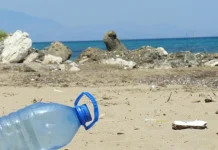
It is not only industrial and sewage discharges that affect the pollution of the Italian coasts. Man ‘s rudeness and carelessness largely contribute to making our beaches real trash cans. The waste abandoned by tourists who are not attentive to the common civilization has literally invaded some Italian coasts: plastic waste, cigarette butts and metal garbage endanger the integrity of the delicate maritime ecosystems .
As part of the “Clean Beaches and Seabeds – Clean-up the Med” campaign, Legambiente has plumbed the Italian coast to survey the type of garbage most present on the coasts and in the open sea, as well as the density of bathing garbage. The study was conducted on a sample of free beaches. The result
The waste most present on Italian beaches are plastic waste (65.4%), then cigarette butts (6.8%) and metal waste (5.9%).
Here is the complete report of Legambiente: Beach Litter Legambiente 2019
Note from Legambiente: some clarifications on the data
With reference to the analyzes carried out by Goletta Verde technicians along the Italian coasts, it is specified thatthe objective of the monitoring of Legambiente, every year, is to focus attention on the risk of pollution caused by the lack or inadequacy of the purification service and the presence of discharges that pour into marine waters . In this regard, the determination of the individual points takes place through the collection of information on the territory by the local clubs of Legambiente and the reports of citizens through the SOS Goletta service.
In recounting the photograph taken by Goletta Verde, Legambiente has never claimed that the coast, nor the entire coastal strips of the individual municipalities are polluted and above all has never given judgments on the bathing ability of the waters.. Task carried out by the ARPA in concert with the local administrations, whose data are the reference data available on the website of the Portale delle Acque.
The analyzes of Goletta Verde are not representative of the quality of bathing because that is not our goal. We do not assign bathing licenses, as we photograph a situation at a given moment and relating exclusively to the points monitored by our mobile laboratory. The opinion of Legambiente refers exclusively to the points monitored as part of the Goletta Verde campaign, taken in particular near mouths, canals and ditches with the aim of denouncing how even today these are a receptacle for untreated discharges, constituting the main source of pollutants in the sea, as is indicated by the directive community that asks to monitor even the points most at risk of pollution and not just to verify the bathing ability of the beaches. The criteria we adopt in determining the sampling points meet this objective.
At this link you can find the overall analysis of 2019: green schooner results


