










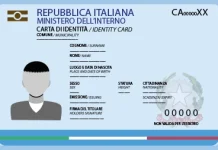
















The electronic identity card (often abbreviated to CIE) has replaced the function of the old paper identity document. Although the replacement process was particularly troubled, by now almost all the Italian municipalities have worked towards the release, and sooner or later the entire population will have access to the new electronic document.
It has some differences compared to the paper model: it is made of plastic material and the size of a credit card , it has a radiofrequency microchip that stores the data of the holder, the photo is laser printed in black and white and on the back it shows the tax code of the individual printed as a barcode.
Here is a guide with all the information you need to apply for the CIE: costs, times and methods of issuing.
LOOK AT THE INFOGRAPHICS : Guide to the Electronic Identity Card
How much does the electronic identity card
cost Description Cost fixed cost € 16.79
secretarial expenses
(variable from municipality to municipality) between € 5.21 and 11.21
TOTAL between € 22.00 and € 28.00
When to renew the identity card
The CIE has different validity depending on the age of the applicant :
- Infants (Under 3): valid for 3 years
- Minors (Under 18): valid for 5 years
- Adults : valid for 10 years
NB : obviously the CIE must be renewed also in case of theft, loss or deterioration.
What you need to apply for the CIE: necessary documents
- 1 passport photo in paper or digital format (dimensions 35 x 45 mm, such as passport photos)
- Tax Code or Health Card
- Old valid identity document
NB : in case of first release or in the absence of another valid identification document, 2 witnesses must be present with an identification document. On the other hand, if the applicant is a minor, the presence of both parents is required.
Where to do the CIE: application procedure
- Book an appointment online at the Registry Office of the municipality of residence (optional, recommended only for large municipalities)
- Go to the Registry Office of the municipality of residence with the necessary documentation
- Leave fingerprints
- Sign the declaration of consent or refusal to donate organs or tissues
- Expressly request that the document be valid for expatriation ; in the case of minor dependent children, attach a declaration of consent for expatriation signed by the other parent (or the authorization of the tutelary judge in the case of divorced parents).
- Sign the data verification summary sheet
- Pay the price for issuing the CIE. Cash may not be accepted in some municipalities. In this case it will be necessary to pay via POS or pay a postal order to the treasury account of the municipality to which you belong
- Receive and keep the receipt of payment (essential to collect the CIE once ready) and the replacement sheet (usable as a temporary identification document)
- Collect the document or wait for it to be delivered to you by post. In small municipalities you will be given the date on which you can go to the collection. In large municipalities you will be asked for the address of residence for direct shipping to the citizen.
In the event that the applicant is a minor
Minors can obtain their personal CIE. Both at the time of the request and at the time of release, parents must be present , whose names will be printed on the back of the document with a ready face (in the past it happened that the insertion of the names of the parents did not occur due to an oversight; therefore it is recommended to ask the official to enter names).
How to request it online
It is possible to book an appointment online at the registry officeof the municipality of residence through the official government website. After visiting the site, click on the blue box “Booked” at the top right. At that point, it is necessary to verify that your municipality of residence has already activated the service for issuing the CIE.
After doing this, the Cie Agenda portal will be opened and you will have to log in to it by clicking on the item “Access for citizens”. If you do not have the credentials, then you will need to register at this link. Once registration is complete, a real calendar will open where you can make an appointment with the municipality to request your CIE.
Municipalities where the CIE is active
Printing and issuing of the CIE are carried out by, but the request is forwarded by the Registry Office of the applicant’s municipality of residence.
To date, very few municipalities (about 400) have not yet activated the service for release (they do not have some necessary tools, such as the fingerprint reader). To find out if the CIE is issued in your municipality of residence, just visit this page.
Times of release
. Both in the case of the online application and in the case of a direct application to the municipality, the card will be available within 6-10 working days after making the request . A cover letter will also be issued upon delivery.
How it works: features of the document
Features on the front:
- Unique National Number (constitutes the card number)
- Municipality of issue of the document
- Personal information (Surname, Name, Gender, Height, Place and Date of birth)
- Citizenship
- Issue date and expiration date
- Applicant’s signature
- Card Access Number – CAN
- Validity for expatriation (in case of non-validity, a note certifying its invalidity is indicated)
Features on the back:
- In the case of a minor, the surname and name of both parents or whoever takes their place will be present
- Tax ID code
- Details of birth certificate
- Residence address
- For citizens abroad, the municipality of AIRE registration will be indicated
- Tax code in the form of a barcode
- Machine Readable Zone – MDZ
What you can do with the new CIE
You can do many things with the CIE. The Electronic Identity Card can be used for example to request the SPID , the electronic digital identity, essential for requesting state subsidies (for example the Culture Bonus 18APP). Moreover, thanks to the digital paper it is possible to be able to enter the online services of the Public Administration .
Where you can go with the CIE valid for expatriation
With the Electronic Identity Card, both adults and accompanied minors can circulate freely in some foreign countries (provided that the wording “not valid for expatriation” is not present in the document ).
With the CIEIt is possible to circulate in all countries of the European Union , it is also possible to enter countries such as Switzerland, the Principality of Monaco, Vatican City, Liechtenstein, United Kingdom, Egypt, Latvia, Morocco, Montenegro, Tunisia and Turkey. For some of these countries there may be special restrictions, therefore it is advisable to consult the Farnesina website traviaresicuri.it before traveling.
LOOK AT THE INFOGRAPHICS : Guide to the Electronic Identity Card


